 Reedley Primary School
Maths
We follow the Red Rose Mastery Maths Scheme of work at Reedley Primary School.
In the Files section below, you will find a pictorial representation of our written calcualtions policy for Addition, Subtraction, Multiplication and Division.
Important message for Year 4
The Multiplication Tables Check (MTC) is a key stage 2 assessment to be taken by pupils at the end of year 4 (in June). The MTC’s purpose is to ensure the times tables knowledge is at the expected level. In the 2023/2024 academic year, the multiplication tables check (MTC) became statutory for primary schools.
The Multiplication Times Tables Check is an online test where the pupils are asked 25 questions on times tables 2 to 12. For every question, you have 6 seconds to answer, and in between the questions, there is a 3-second rest. Questions about the 6, 7, 8, 9, and 12 times table come up more often. The questions are generated randomly.
Click on the Trophy cabinet tab and create a free account so that you can collect trophies in a virtual cabinet as you improve your timestables.
Other websites that can be used to get yourself ready for the test are, Timestable Rockstars (Sound check area), Timestable games, MathsFrame Hit the Button,
You can also use these webistes to support:
Autumn Term
Our units this term are…
Week 1: Unit 1, Place Value, Addition and Subtraction
This week in maths, we have been developing our understanding of place value. The children have explored the value of different digits within numbers, using a range of practical resources, pictorial representations and written methods to support their learning.
Place Value and Partitioning.
We began by exploring thousands, hundreds, tens and ones. The children used place value counters to represent numbers before partitioning them using part-whole models.
For example, the number 3,462 can be partitioned into:
- 3 thousands = 3,000.
- 4 hundreds = 400.
- 6 tens = 60.
- 2 ones = 2.
3,462 = 3000 + 400 + 60 + 2.
Try at home: Give your child a four-digit number and ask them to draw place value counters or a part-whole model to represent it. Can they explain the value of each digit?
Ones and Tenths
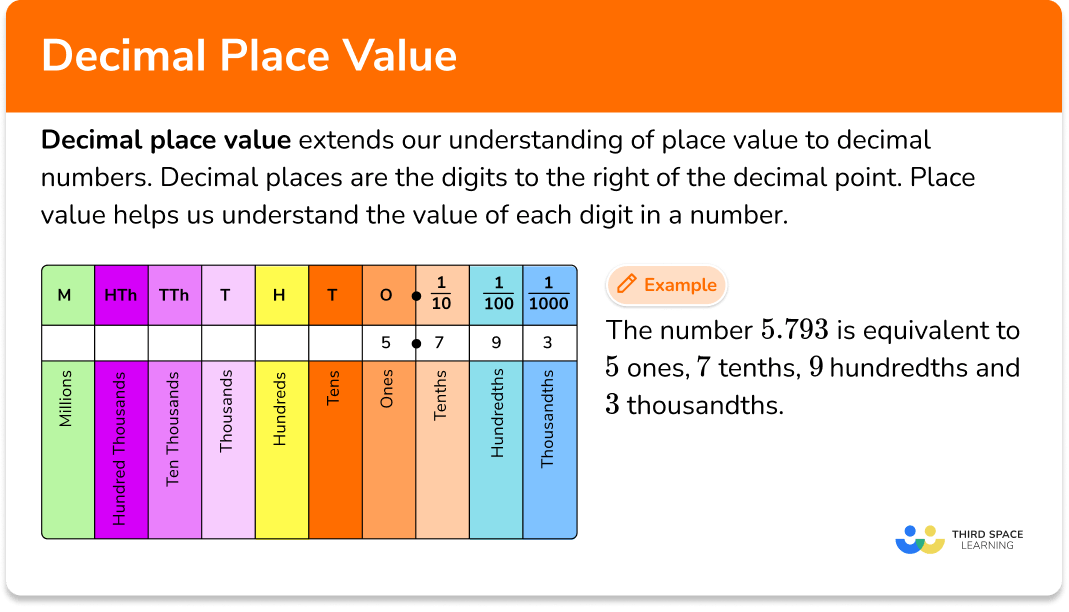
We then extended our place value knowledge to include decimal numbers, focusing on ones and tenths. The children explored how ten tenths make one whole and used place value counters to represent and partition decimal numbers.
For example, 4.7 is made up of 4 ones and 7 tenths.
4.7 = 4 + 0.7
Comparing and Ordering Numbers
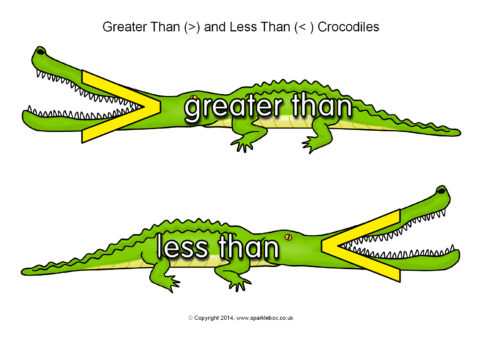
The children have begun to compare numbers using the greater than (>), less than (<) and equal to (=) symbols. We also practiced ordering numbers from smallest to largest, looking carefully at the value of each digit.
- 3,456 < 3,465
- 5.8 > 5.2
- 4.6 = 4.6
Rounding to the nearest 10.
To finish the week, we explored rounding four-digit numbers to the nearest 10. The children identified the multiples of 10 on either side of a number before deciding which multiple it was closest to.
We learnt that if the ones digit is 0 - 4, we round down, and if it is 5 - 9, we round up.

Week 2: Unit 1, Place Value, Addition and Subtraction
This week, we have been building on our place value knowledge to develop our addition and subtraction skills. The children have used place value counters, number lines and partitioning to support their calculations, developing their confidence when working with larger numbers.
Adding and Subtracting 1,10,100,1000
We started the week by exploring what happens to a number when we add or subtract 1, 10, 100, 1000. The children looked carefully at which digits changed and used their understanding of place value to explain why.
Try at home: Write down a four-digit number. Ask your child to find 1,10,100, and 1,000 more or less.
Adding and Subtracting Three-Digit Numbers
The children showed great resilience when adding and subtracting two three-digit numbers. They have used place value counters and number lines to represent their calculations, including those involving exchanging. no just
To begin, we partitioned one of the numbers into hundreds, tens and ones. This helped us to break our calculations down into smaller, more manageable steps. When using number lines, the children added or subtracted each part of the partitioned number, carefully labelling their jumps.
Key Learning: When adding, ten ones can be exchanged for one ten and ten tens can be exchanged for one hundred. When subtracting, we can also exchange one hundred for ten tens or one ten for ten ones.
Number Sequences
Our third lesson of the week explored number sequences, identifying patterns and working out the size of the jumps between numbers. The children continued sequences and found missing numbers.
Adding Three-Digit and Two-Digit Numbers
Subtracting Two-Digit Numbers from Three-Digit Numbers
To end the week, we applied our partitioning and number line strategies to consolidate our understanding of exchanging. The children partitioned two-digit numbers into tens and ones, making jumps forwards when adding and backwards when subtracting, paying particular attention to when they crossed into the next or previous ten or hundred.
Well done everyone!
Week 3: Unit 2, Length and Perimeter


How to Convert Centimetres to Millimetres (cm to mm) - Maths with Mum
We had an exciting and practical weeks in maths, with plenty of opportunities to develop our measuring skills!
Measuring and Drawing Accurately
The children recapped their knowledge of 2D shapes, using rulers to measure the lengths of their sides in centimeters (cm) and millimetres (mm). The children then challenged themselves to draw lines to match given measurements, focusing on their accuracy and precision.
Representing Measurements as Decimals
We built upon our measuring skills by exploring how to represent cm and mm as decimal numbers. This allowed us to revisit our previous learning on place value, recognising that each millimetre represents one tenth of a centimetre.
For example:
- 4 cm and 5 mm = 4.5 cm
- 7 cm and 2 mm = 7.2 cm
- 3 cm and 8 mm = 3.8 cm
Try at home: Encourage your child to measure everyday objects around the house and record their measurements in cm and mm/ decimals.
Solving Measurement Word Problems
Next, the children applied their previous learning of adding and subtracting three-digit and two-digit numbers to measurement based word problems.
They carefully interpretated questions such as 'How far altogether?' and 'How much further', to identify the correct operation before using their number line strategies to solve them.
Example: Tom walked 245 metres and then walked a further 38 metres. How far did he walk altogether?
Calculating Perimeter
To end another fantastic week of maths, the children worked incredibly hard to understand the concept of perimeter. They used their addition skills to calculate the total distance around a shape, before challenging themselves to identify missing side lengths using their knowledge of squares and rectangles.
To challenge themselves further, the children explored more complex shapes made up of two adjoining shapes (compound shapes), carefully working out which sides formed the outside perimeter.
Week 4: Unit 3, Statistics
Finding Missing Numbers Using Decimals
We began another exciting week of learning by revisiting our understanding that ten tenths make one whole.
The children worked really hard to identify missing decimal numbers in addition and subtracrion calculations, using part-whole bar models to support them.
- 0.7 + ___ = 1
- 1 - 0.4 = ___
Once the children were confident, we extended our learning by finding missing numbers when working with 10 rather than 1.
- 5.7 + ____ = 10
- 10 - 6.3 = _____
Interpretating Data and Creating Bar Charts
The children became data detectives as we explored how information can be represented using bar charts.
The children showed great attention to detail when deciding how to label the horizontal (x) and vertical (y) axes, choosing an appropriate scale and ensuring each bar accurately represented the information they were given.
It was wonderful to see the children taking pride in the presentation of their bar charts, using their ruler carefully and recognising the importance of accuracy when representing data.

Drawing and Interpreting Bar Charts - Maths with Mum
We continued our data handling journey by exploring pictograms.
The children worked very hard to interpret the information, paying close attention to the key to understand what each symbol represented.

Drawing and Interpreting Pictograms (Pictographs) - Maths with Mum
Week 5: Unit 4, Addition and Subtraction
This week, we moved on to our new unit of addition and subtraction, building upon our previous learning of place value, rounding and exchanging.
The children have impressed us with their determination and perseverance when tackling increasingly challenging calculations and exploring different methods.
Estimating and Column Addition
Our first lesson this week was rounding two four-digit numbers to estimate what the answer might be, before using the formal column method to calculate the exact answer.
The children did incredibly well, using the correct place value columns and recognising when an exchange was needed.
Finding Missing Numbers
To challenge ourselves further, we solved column addition calculations with missing digits.
This encouraged the children to think carefully about each column, working backwards from the answer and considering whether an exchange had taken place.
Well done Year 4!
Adding Three Four-Digit Numbers
This presented an exciting new challenge, adding three four-digit numbers, as the children sometimes needed to exchange more than one group of ten into the next place value column.
It was wonderful to see the children becoming increasingly confident with the written method.
Choosing Efficient Methods
Choosing the most efficient method is important when tackling a range of calculations. The children carefully considered the numbers involved before selecting a mental or written strategy.