 Reedley Primary School
Maths

This year, the children will be working on Red Rose Maths. It is important that each year group follows the correct strategy. In the file section below,are all link the Red Rose Maths.
In Maths, we will be exploring the huge array of different problems that can be solved using mathematics.
We will ensure that children are confident using both formal written methods of calculation
but also mental arithmetic skills to solve questions quickly and easily.
We follow the Red Rose Maths teaching scheme, which includes fluency,
reasoning and problem solving activities.
This approach enables children to become secure in a topic,
as well as providing a suitable amount of challenge for differing abilities.
It is important that children have a firm grasp of all their times tables up to 12 x 12,
including the related division facts.
This will not only boost their confidence but also speed up both simple and more complex problem solving.
It also allows children to spot patterns.
Therefore, any help or practice you help you can give your children will be of great benefit.
Times Table Rockstars can really help with this!
Here are our claculation policies:
Calculations-policy-addition.doc
Calculations-policy-division.doc
Calculations-policy-multiplication.doc
Calculations-policy-subtraction.doc
Mental-calculations-policy-addition-and-subtraction.doc
Mental-calculations-policy-multiplication-and-division.doc.docx
Autumn 1
Our units this half term are…
Place Value
Place Value.
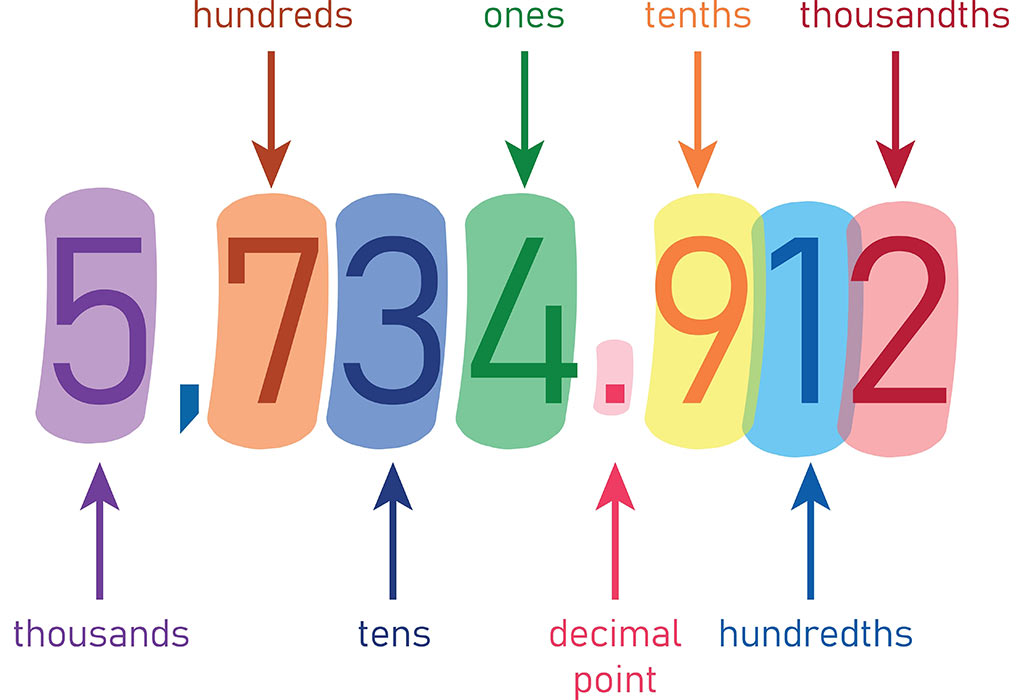

Below are some of the ways that the children have shown great understanding in Place Value.
Understanding: Children were able to explain that in 6,482,315, the digit 8 represents 80,000,
because its position is in the ten-thousands column using counters, grids and mental maths.
Using expanded form: Children showed how to represent 4,305,021 as
4,000,000 + 300,000 + 5,000 + 20 + 1 and explain why there are no hundreds
or tens of thousands.
Comparing numbers: The children compared 7,205,000 and 7,250,000,
identifying that 7,250,000 is greater because the digits in the ten-thousands place differ.
Rounding: The children were able to round 6,749,321 to the nearest million and
explain that it rounds to 7,000,000 because the hundred-thousands digit is 7